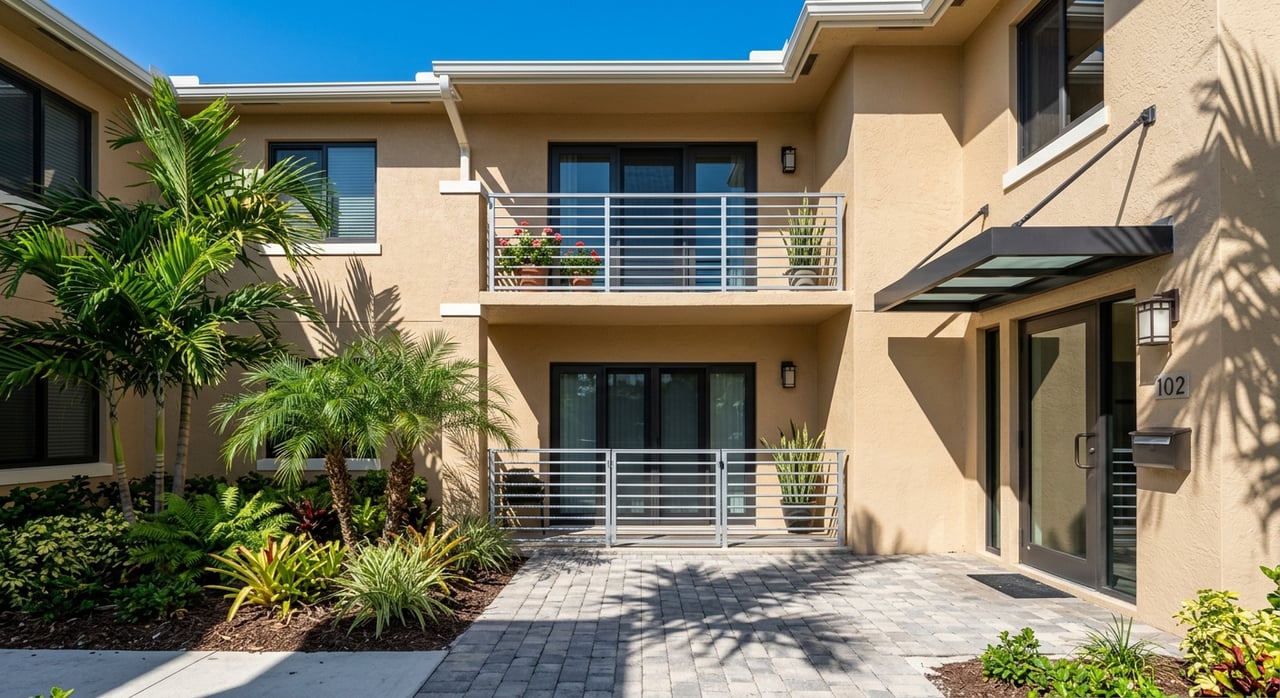
Understanding South Florida Country Club Community Models
June 18, 2026
June 18, 2026
Trying to choose between an equity and non-equity country club community in South Florida? That label can affect far more than amenities. It can shape your upfront costs, your monthly obligations, your voting rights, and even what happens when you sell. If you are comparing club communities in Miami-Dade or looking at homes tied to private amenities, this guide will help you understand the differences and the questions to ask before you buy. Let’s dive in.
When you shop for a home in or near a South Florida country club community, it is easy to focus on the lifestyle first. Golf, dining, tennis, marina access, and clubhouse perks can be exciting. But the membership structure behind those amenities matters just as much as the home itself.
In Miami-Dade, nearby examples show that country club models can vary widely. Fisher Island presents an equity ownership model, Porto Vita uses a residents-only clubhouse structure tied to ownership, and Turnberry markets a more access-based membership with initiation fees, dues, and amenity tiers. That means you should not assume every club community works the same way, even within the same county.
In general, an equity country club membership means members have an ownership interest in the club or club facilities. Public examples in South Florida describe equity clubs as member-owned or governed by members through an elected board. In practical terms, you are often buying more than access. You may also be buying into the club itself.
That ownership piece can come with more involvement in governance. Boca West states that its facilities are owned by the membership and governed by a board elected by the general membership. Other club explanations also describe equity members as having voting rights and a voice in certain club matters.
For you as a buyer, that can be a meaningful benefit. If member ownership and governance matter to you, an equity model may feel more aligned with your goals. At the same time, equity does not automatically mean simpler or cheaper.
Equity communities often include a large upfront contribution along with ongoing dues and separate community charges. Fisher Island’s public materials, for example, list a $350,000 equity contribution fee and also note separate annual community association dues of $53,378.36. Optional golf access and additional golf-related charges may also apply.
That example sits at the high end of the market, but it shows an important point. In an equity community, your costs may include multiple layers, such as club buy-in, annual dues, association dues, and optional amenity fees. You need to review all of them together to understand the full picture.
A non-equity country club membership usually means you are paying for access to amenities, not buying an ownership stake in the club. In this model, the club is generally owned and operated by an entity other than the members. Your relationship is more contractual than ownership-based.
That often means less governance influence. Club explanations of non-equity membership typically state that members are not involved in club operations in the same way equity members may be. For many buyers, that is not a drawback. If your priority is lifestyle access rather than club governance, a non-equity model may fit just fine.
Non-equity does not mean low-cost or low-commitment. It usually means the cost structure is built around a non-refundable initiation fee, ongoing dues, and possible usage charges. Turnberry’s membership materials, for example, describe non-refundable memberships, reduced initiation fees for some member categories, annual dues reductions for younger members, and certain golf tiers with cart-fee-only access.
In plain terms, a non-equity club may give you flexibility in some areas, but you still need to know exactly what you are paying for. Golf may be included, optional, limited by tier, or subject to extra charges. Food-and-beverage minimums or other service-related costs may also be part of the deal, depending on the club terms.
Not every club community fits neatly into the equity or non-equity box. Some South Florida communities bundle membership with ownership or residency. That can create a hybrid setup where access to amenities is tied directly to the property.
For example, Porto Vita states that residents automatically become members of its clubhouse structure, while Woodfield describes mandatory club membership for homebuyers in its main community. For buyers, this means the better question is not just “Is it equity or non-equity?” It is also “How exactly does membership connect to the home I am buying?”
Before you make an offer in a South Florida club community, make sure you understand every cost layer. In Florida HOA communities, assessments or amenity fees under the governing documents may become a lien if unpaid. That means you could be dealing with both community charges and club charges at the same time.
Ask for a complete fee breakdown so you can compare the home’s true carrying cost, not just the purchase price. A clear review now can help you avoid surprises later.
One of the biggest practical differences between equity and non-equity communities is who controls the rules, fees, and future changes. In an equity model, members may have a voting role or elect leadership. In a non-equity model, the owner or operator typically has more direct control over club decisions.
That does not make one model better for everyone. It simply means you should understand who can change dues, rules, and amenities over time. If you like predictability and want to know how decisions are made, this is a smart area to review closely.
Membership rights do not always transfer the same way from one owner to the next. In some communities, membership may follow the property. In others, it may be personal to the member or subject to separate approval. Some communities may also offer transferability benefits that affect waiting lists or access tiers.
This matters when you think about resale. Ask what happens when you sell, whether any membership benefits carry over to the next buyer, and whether any part of your buy-in can be recovered. If transfer or resale terms are vague, ask for them in writing through the official documents.
If you are considering a country club property in Miami-Dade, ask for the governing and financial documents early in the process. Florida law requires associations to keep items such as governing documents, current contracts, and financial records as official records. That gives buyers a paper trail to review before making a final decision.
You do not need to decode everything alone. A careful document review can help you understand what is mandatory, what is optional, and what costs may continue after closing.
If the property is a condominium, there may also be additional required disclosures tied to the sale. That is another reason to start your review early rather than waiting until the last minute.
Once you have the documents, focus on practical questions that affect your day-to-day use and long-term cost. This is where buyers often uncover the biggest differences between communities that look similar on the surface.
Bring a checklist and compare each community side by side. That teacher-style approach can make a complex decision much easier.
Equity and non-equity country club communities can both offer a strong lifestyle fit, but they work differently behind the scenes. Equity usually points to ownership interest and possible voting rights, while non-equity usually means access-based membership without ownership. Hybrid models add another layer, especially when membership is tied to residency.
If you are buying in the Miami-Dade area or comparing South Florida club communities from a distance, the best move is to slow down and compare the documents, fee structures, and resale terms carefully. A clear understanding now can help you choose a home and club structure that matches your lifestyle, budget, and long-term plans.
If you want patient, step-by-step guidance as you compare South Florida properties and community documents, Abbey Adair - Main Site is here to help you move forward with clarity.
Stay up to date on the latest real estate trends.







Embarking on a real estate journey can be daunting, but you don't have to do it alone. With my unique blend of educational insight and real estate expertise, I'm here to guide you through every step, ensuring a smooth, informative, and successful experience. Ready to get started? Contact me today, and let's make your real estate dreams a reality.